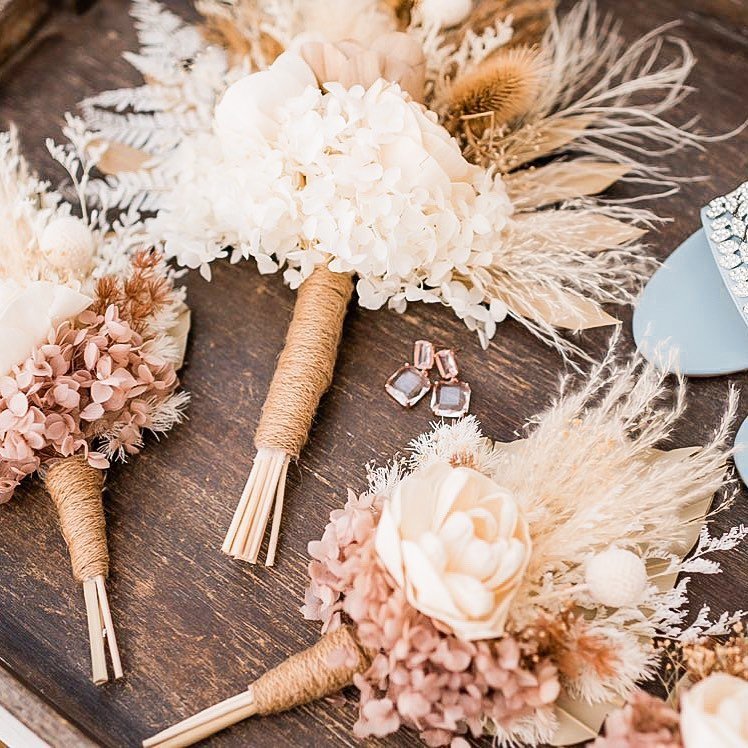
How to preserve a wedding bouquet is one the most common question among the young generation. Your wedding bouquet represents one of the most meaningful moments of your life. After months of planning and choosing the perfect flowers, it’s natural to want to keep those beautiful blooms as a lasting memento of your special day.
While fresh flowers naturally fade, there are several proven methods to preserve your wedding bouquet so you can treasure it for years to come. From traditional air-drying techniques to modern freeze-drying technology, each preservation method offers unique benefits and results. Some methods work better for certain flower types, while others are more budget-friendly or faster to complete.
This article will walk you through 7 effective ways to preserve your wedding bouquet, helping you choose the method that best fits your flowers, timeline, and budget. You’ll also discover essential preparation tips and learn how to display your preserved bouquet once the process is complete.
7 Ways to Preserve Your Wedding Bouquet
1. Air Drying: The Classic Method
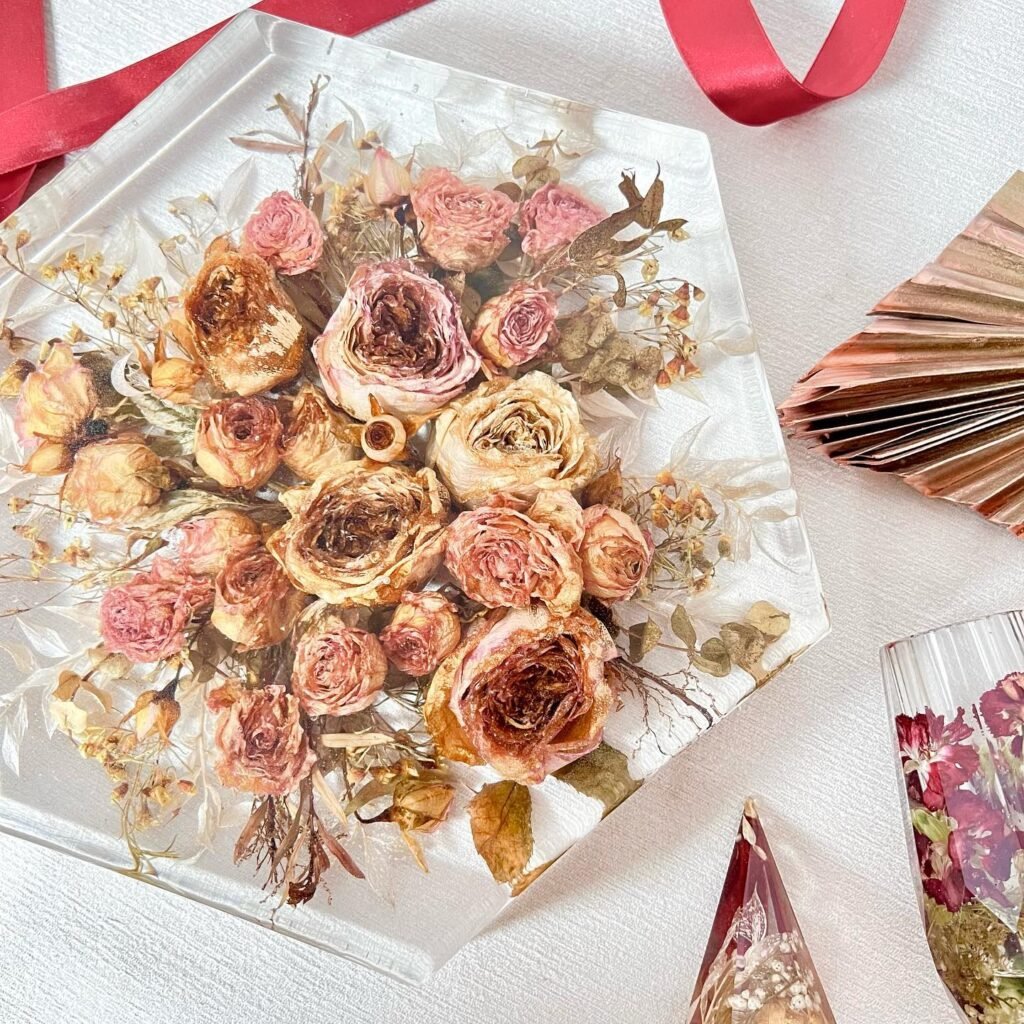
Air drying remains the most popular and accessible way to preserve wedding bouquets. This time-tested technique works especially well for hardy flowers like roses, baby’s breath, lavender, and eucalyptus.
To air dry your bouquet, start by removing any excess foliage and cutting the stems to your desired length. Bundle small groups of flowers together with rubber bands, leaving space between blooms for proper air circulation. Hang these bundles upside down in a dark, dry, well-ventilated area away from direct sunlight.
The drying process typically takes two to four weeks, depending on the flower types and humidity levels in your area. While air-dried flowers will lose their original color and become more muted, they develop a rustic, vintage charm that many couples love. This method costs nothing beyond basic supplies and gives you complete control over the process.
2. Pressing: Perfect for Delicate Flowers
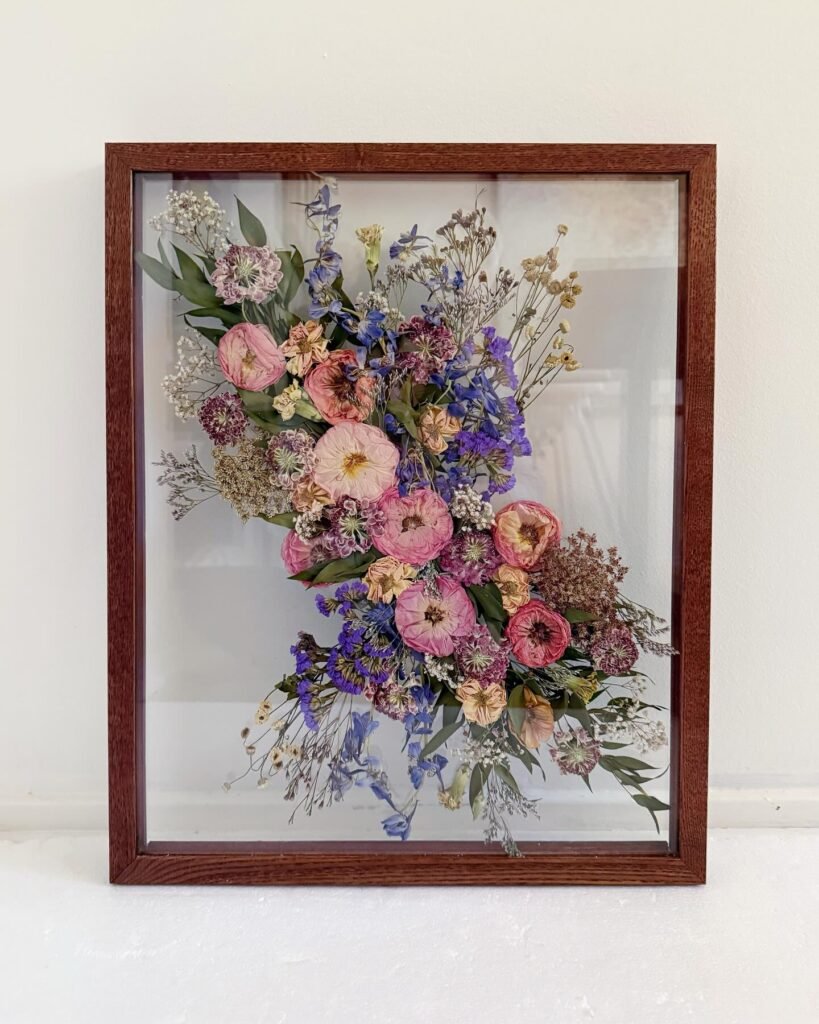
Flower pressing creates flat, delicate keepsakes that work beautifully in frames, scrapbooks, or shadow boxes. This method suits smaller, thinner flowers like pansies, violets, and individual petals from larger blooms.
You can press flowers using a traditional flower press, heavy books, or specialized pressing paper. Place your flowers between absorbent paper, ensuring they don’t overlap, then apply steady pressure. Change the paper every few days during the first week to prevent mold and ensure proper drying.
Pressed flowers typically take two to four weeks to fully dry. Once complete, handle them carefully as they become quite fragile. This preservation method works best when you dismantle your bouquet and press individual flowers rather than attempting to press the entire arrangement.
3. Freeze Drying: Professional-Quality Results
Freeze drying produces the most lifelike results, maintaining much of the flowers’ original color, shape, and texture. This advanced technique removes moisture through sublimation, transforming ice crystals directly into vapor without passing through a liquid stage.
Most couples choose professional freeze-drying services since the specialized equipment costs thousands of dollars. The process takes several weeks and typically costs between $150 to $500, depending on bouquet size and local service providers. While more expensive than other methods, freeze-dried flowers can last decades when properly cared for.
Freeze drying works well for most flower types, including delicate blooms that don’t respond well to air drying. The flowers maintain their three-dimensional shape, making them perfect for display cases or shadow boxes.
4. Silica Gel Drying: Fast and Effective
Silica gel offers a middle ground between air drying and professional freeze-drying services. This desiccant quickly absorbs moisture from flowers while helping them maintain better color and shape than traditional air drying.
Purchase silica gel crystals from craft stores, then bury your flowers completely in the crystals within an airtight container. Different flowers require different drying times, ranging from two days for delicate blooms to one week for thicker, more substantial flowers. Check progress regularly to avoid over-drying.
This method works particularly well for roses, carnations, and other full-bodied flowers. The initial investment in silica gel pays off since you can reuse the crystals multiple times by reactivating them in a low oven.
5. Wax Dipping: Maintaining Natural Appearance
Wax dipping helps preserve your bouquet’s natural appearance while adding a protective coating. This technique works best for sturdy flowers and creates a glossy, slightly translucent finish.
Melt paraffin wax in a double boiler, maintaining a temperature around 140°F. Quickly dip each flower head into the wax, allowing excess to drip off before the wax hardens. Work quickly since wax solidifies rapidly at room temperature.
The wax coating helps flowers retain their shape and provides some color preservation. However, wax-dipped flowers require careful handling and should be kept away from heat sources that might melt the protective coating.
6. Resin Embedding: Creating Lasting Art Pieces
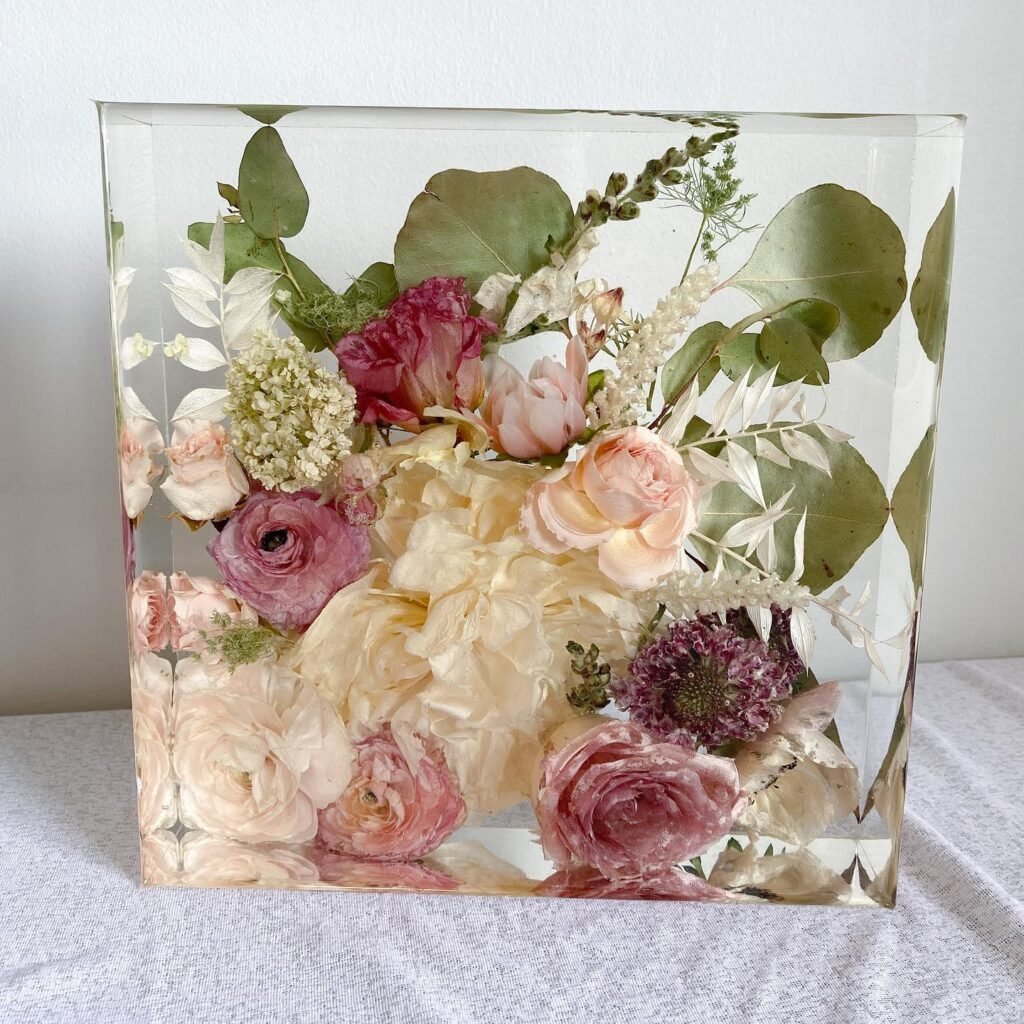
Embedding flowers in clear resin creates stunning, permanent displays that can serve as decorative art pieces. This modern preservation technique encases individual flowers or small arrangements in crystal-clear resin blocks or custom shapes.
Working with resin requires proper ventilation and safety equipment, as the chemicals can be toxic. Mix the resin according to manufacturer instructions, pour a base layer, position your flowers, then add remaining resin to completely cover the blooms. The curing process takes 24 to 48 hours.
Resin preservation creates truly unique keepsakes that can be shaped into paperweights, bookends, or decorative objects. While the learning curve is steeper than other methods, the results offer unmatched durability and visual impact.
7. Professional Preservation Services: Expert Results
Many couples choose professional preservation services for their wedding bouquets. These specialists have experience working with different flower types and can recommend the best preservation method for your specific blooms.
Professional services often offer multiple preservation options, custom display cases, and restoration services if your bouquet gets damaged before preservation begins. While costs vary significantly based on location and services chosen, professional preservation typically ranges from $100 to $800.
Research local providers well in advance of your wedding day. Many services require you to deliver your bouquet within 24 to 48 hours after your wedding for optimal results.
Preparation Tips for Best Results
Regardless of which preservation method you choose, proper preparation significantly impacts your results. Photograph your bouquet immediately after your wedding ceremony to document its original appearance before any wilting occurs.
Remove your bouquet from water sources as soon as possible after the reception ends. Excess moisture makes preservation more difficult and can lead to mold or bacterial growth. Gently shake off any water droplets and blot stems with paper towels.
If you can’t begin preservation immediately, store your bouquet in a cool, dry place away from direct sunlight. Never refrigerate your bouquet, as the high humidity can damage the flowers and make preservation more challenging.
Consider preserving only the most meaningful flowers if your bouquet contains mixed varieties that require different preservation techniques. You might air dry the roses while pressing smaller accent flowers, creating multiple keepsakes from one bouquet.
Bottom Lines
Your preserved wedding bouquet deserves a beautiful display that protects it from damage while showcasing its sentimental value. Shadow boxes work wonderfully for three-dimensional preserved flowers, while pressed flowers shine in elegant frames paired with wedding photos or meaningful quotes.
Consider the lighting and humidity levels in your chosen display location. Direct sunlight will fade preserved flowers over time, while high humidity areas can cause deterioration. Choose a stable environment away from heating vents, windows, and moisture-prone areas like bathrooms.
Regular gentle dusting with a soft brush helps maintain your preserved bouquet’s appearance. Avoid using cleaning sprays or water, which can damage the preserved flowers. With proper care and display, your wedding bouquet preservation will remain a cherished reminder of your special day for decades to come.
Start planning your preservation method before your wedding day arrives. This preparation ensures you can act quickly after your reception ends, giving your bouquet the best chance at becoming a beautiful, lasting keepsake of your most important celebration.